

ISN: In Ten
Sequoya Borgman on Why Advising Other People's Deals Convinced Him Not to Raise a Fund
Sequoya Borgman is the Founder and CEO of Borgman Capital, a Milwaukee-based Independent Sponsor platform with offices spanning Minneapolis, Indianapolis, Portland, and South Florida. A CPA who spent nearly two decades advising buyers and sellers at RSM and KPMG before founding Borgman Capital in 2017, he has since completed more than 20 acquisitions without ever raising a traditional fund, building a network of retail investors that has kept every subsequent deal oversubscribed. He also founded Pass the Hat, a platform giving accredited investors direct access to deals once reserved for institutions.
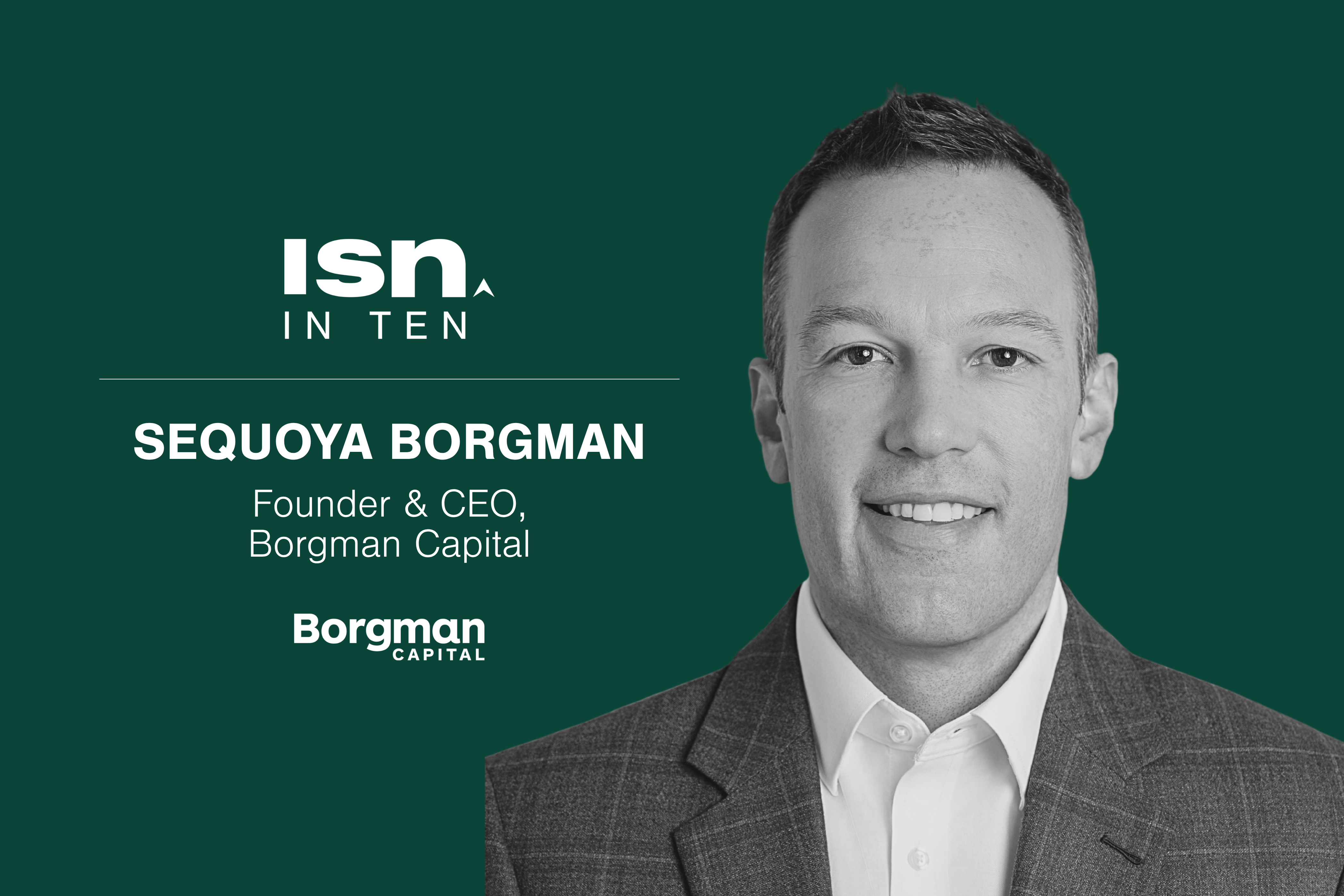
ISN: In Ten is a short-form interview series from Independent Sponsor News spotlighting the people building, backing, and transacting across the Independent Sponsor ecosystem. Ten questions designed to capture experience, conviction, and current views on the market - answered directly, without the polish.
Introducing: Sequoya Borgman
Typically, Independent Sponsors enter the deal-making world from banking or operating backgrounds.
Sequoya Borgman arrived from the other side of the table, spending nearly two decades inside RSM and KPMG advising private equity firms and their portfolio companies through hundreds of transactions before deciding to do his own.
When he founded Borgman Capital in 2017, he didn't have a fund behind him, so he built his first deal the only way available to him at the time, raising equity from 27 investors in his own network.
Every platform since has been oversubscribed, and Borgman Capital has grown into a network of retail investors backing a firm that now counts more than 20 acquisitions across food and consumer, manufacturing, infrastructure, and business services. The firm operates out of Milwaukee and Minneapolis, with a presence in Indianapolis, Portland, and South Florida; all places Sequoya has targeted precisely because they sit outside the saturated financial hubs where every other sponsor is already competing for the same deals.
Sequoya has also become one of the more visible voices in the Independent Sponsor space, a regular on podcasts and radio who treats content less as marketing and more as an extension of deal sourcing itself. In 2024 he formalized that philosophy and his unconventional experience becoming an Independent Sponsor by launching Pass the Hat, a platform built to give retail investors the kind of visibility into private deals that used to require an institutional relationship.
What follows is a conversation about what 20 years on the advisory side actually taught him, why he never felt the need to raise a fund, and what he thinks most Independent Sponsors get wrong about what they're truly building.

Interview Q&A
1. You spent 18 years in public accounting, rising to Partner at RSM and before that a Managing Director at KPMG, advising on other people's deals for two decades. What did that vantage point teach you about deal judgment that you couldn't have learned any other way, and how directly does it show up in how you underwrite today?
"Spending nearly two decades advising buyers and sellers gave me a front-row seat to hundreds of transactions. The biggest lesson wasn't financial, it was behavioral. Great deals succeed because of people, not spreadsheets.
You also learn that every deal looks good in a CIM. The real work is understanding what's underneath the numbers: management quality, customer relationships, culture, and whether the business can withstand inevitable surprises.
That perspective absolutely shapes how we underwrite today. Financial modeling matters, but we're really underwriting management teams, business quality, and downside protection. I've seen enough transactions over the years to know that assumptions are almost always wrong. The question is whether the business is strong enough to perform anyway."
2. Your first platform in 2018 closed with 28 HNWIs and a few family offices. Every platform since has been oversubscribed. Walk us through what changed, structurally and in how you pitch a deal, that took retail capital from a necessity to a repeatable engine.
"The biggest change wasn't how we pitched deals, it was building a track record. Our first acquisition required a tremendous amount of education because investors were really underwriting me. Today, they're underwriting a repeatable process that's been tested across multiple acquisitions.
We've also become much more institutional. We have better diligence, reporting, communication, and portfolio management than we did in 2017. Investors want consistency and transparency. When you deliver both over a long period of time, capital becomes significantly easier to raise.
Oversubscribed deals are really a byproduct of years of doing the small things well."
3. You've built a network of over 500 LPs without raising a traditional fund. For an Independent Sponsor weighing a fund model against staying deal-by-deal, what's the real tradeoff, and how do you keep that many investors aligned and coming back across ten platforms?
"There isn't a right answer between a fund and deal-by-deal investing. They're simply different models. The deal-by-deal model forces you to earn investor confidence every single acquisition. That's harder, but I also think it creates tremendous discipline because investors vote with every investment opportunity. The key is communication. We spend a significant amount of time updating investors even when we're not raising capital. We want investors to feel like long-term partners rather than names on a distribution list. Ultimately, capital follows trust. If investors consistently understand what you're doing and why you're doing it, they'll continue investing alongside you."
4. You've built Borgman Capital out of Milwaukee first, added Minneapolis, and now have team members in Indianapolis, Portland, and South Florida, rather than Chicago, Dallas, or New York. What does that geography buy you in terms of proprietary deal flow that a crowded hub can't?
"Everyone wants to compete in the same markets. We've intentionally built relationships in places where there are outstanding businesses but fewer institutional buyers. Cities like Omaha, Des Moines, Kansas City, Milwaukee, and Minneapolis have exceptional founder-owned companies that often receive less attention than businesses located in larger financial centers. That geography creates better relationships with intermediaries, accountants, attorneys, and business owners. Proprietary deal flow doesn't happen because you're smarter than everyone else, it happens because people know you before the business comes to market."
5. Your portfolio runs from a custom countertop fabricator to an award-winning cheese producer, spanning food and consumer, manufacturing, infrastructure, and business services. With that much industry agnosticism - and specialization increasingly touted as the key to success when winning a deal - what's the underwriting discipline that keeps twenty acquisitions consistent instead of twenty one-off bets?
"We're industry agnostic, but we're not discipline agnostic. Every investment has to satisfy the same underwriting criteria regardless of industry. Is it a business we understand? Does it have a strong management team? Is there sustainable cash flow? Can we identify multiple ways to create value? What's the downside if things don't go according to plan? Industries change. Good businesses don't. I think specialization can certainly be an advantage, but we've found that disciplined underwriting transfers remarkably well across industries when you're focused on business fundamentals instead of market narratives."
6. As a CPA who spent eighteen years advising other people's deals before doing your own, what's the biggest financial or structuring mistake you see other Independent Sponsors make that someone with your accounting background would catch immediately, and that you catch now.
"One mistake I see is people becoming overly focused on getting transactions closed instead of ensuring the structure works under multiple scenarios. Accounting teaches you to understand how businesses actually generate cash, not just how earnings are presented. Those aren't always the same thing. Many deals fail because buyers underestimate working capital needs, overestimate cash conversion, or don't fully appreciate how incentives are aligned after closing. Structuring matters just as much as valuation."
7. One thing ISN took note of immediately was your regular presence on various industry podcasts like Minds Capital and Built to Sell Radio. There's a lot of opportunity in the private markets to produce and distribute great content, and yet these mediums and platforms are still underutilized. What would you tell an Independent Sponsor who thinks time spent on content is time not better spent sourcing deals?
"People often think content and deal sourcing compete with each other. I think they're the same activity. Every podcast, interview, or article becomes another opportunity for a business owner, intermediary, investor, or management executive to learn who you are before they ever meet you. Private equity has historically been a relationship business. Content simply allows relationships to scale. I can't tell you how many conversations begin with someone saying, "I heard you on a podcast." That's incredibly difficult to measure, but it's impossible to ignore."
8. You launched Pass the Hat to give retail investors direct access to deals that used to be reserved for institutions and the ultra-wealthy. What gap were you actually solving for LPs, and what has building that platform taught you about capital formation that you didn't know from doing it deal by deal?
"Pass the Hat was created because I believe access matters. Historically, many of the best private investments were only available to large institutions or ultra-high-net-worth investors. Technology now makes it possible to broaden that access while still maintaining a disciplined investment process. Building the platform has reinforced something I already believed: investors don't just want returns, they want education, transparency, and access. When people understand what they're investing in, they become significantly better long-term partners."
9. Retail fundraising, tier-two geography, and a public accounting background aren't the playbook most people entering this space are running. What do you think the current wave of Independent Sponsors is getting wrong about how to build a firm that lasts?
"I think too many people focus on transactions instead of firms. Closing deals is important, but sustainable firms are built through reputation, systems, people, and relationships that compound over decades. Independent Sponsors sometimes underestimate how much infrastructure matters. Investor relations, reporting, technology, recruiting, compliance, and communications aren't distractions, they're the foundation that allows you to keep doing deals for decades. The goal shouldn't be to build a great acquisition. It should be to build a great firm."
10. 21 acquisitions in, what do you know now about building an Independent Sponsor firm that you wish you'd known when you were scraping together those first 28 investors?
"I wish I'd appreciated sooner how powerful consistency becomes. Early on, I thought every deal had to be extraordinary. Today, I think it's more important that every interaction is extraordinary. Investors remember how you communicate during difficult periods. Business owners remember whether you did what you promised. Employees remember how they're treated after an acquisition. Reputation compounds just like capital. If you consistently do what you say you're going to do, opportunities begin finding you instead of the other way around."
BONUS ITEM: Tell us about your latest acquisition?
Borgman Capital recently acquired CMW Equipment, a St. Louis-area distributor of concrete production and roadwork equipment, marking the firm's 21st acquisition since 2017. Founded in 1956, CMW has grown from specialized paving and compaction equipment into a full-service distributor covering equipment sales, parts, rentals, and service across ten states.
"What stood out to us about CMW is the combination of a strong business model, a knowledgeable team and a reputation built over decades of serving customers well... With a long-tenured management team, including former owners, remaining involved, we look forward to supporting the company's continued growth while preserving the culture and customer relationships that have made CMW successful"
Read more on the acquisition here.
ISN: In Ten features Independent Sponsors from across the ecosystem. To be considered for a future feature, please contact us here.
News & Research
Subscribe to Independent Sponsor News to be notified when new insights and newsletters are released!





.png)